
 Dental Age Calculator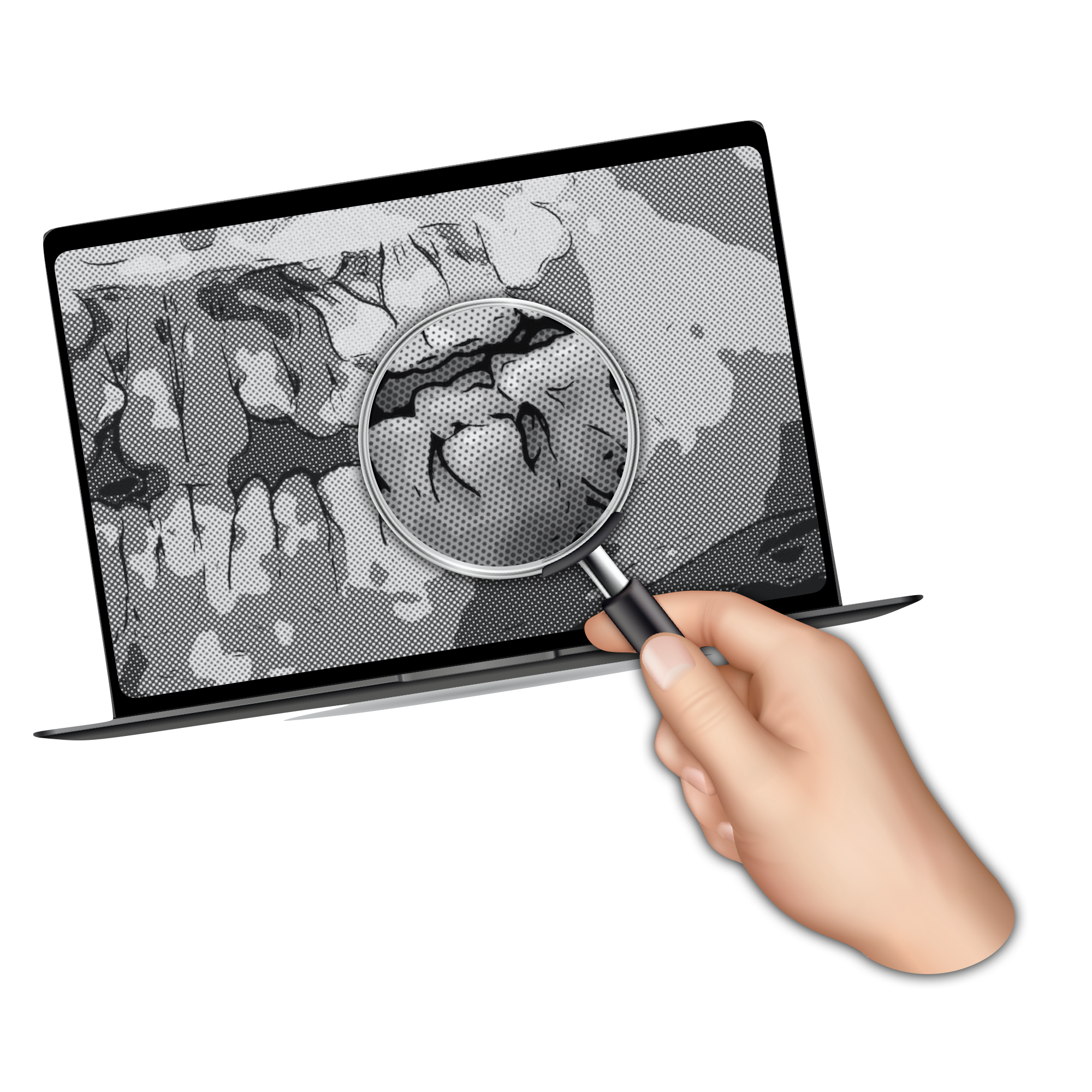






Overview of the Applied Methods
Age estimation is one way to identify and classify individuals based on their estimated age. Age determination is crucial in various medicolegal cases, such as juvenile violations, illegal immigration, child labor, early marriage, and particularly in identifying victims of mass disasters [1][2][3]. In clinical dentistry, determining dental age also plays a crucial role in assisting with diagnosis and therapeutic decisions [4].
The Demirjian method is among the most widely accepted radiographic techniques for dental age estimation [5]. In this approach, Demirjian et al. (1973) used panoramic radiographs of the seven permanent teeth on the left side of the mandible (excluding the third molar). Each tooth is classified into eight developmental stages (A-H) based on calcification, from the initial appearance of crown formation to the closure of the root apex [6]
In 2001, Willems et al. simplified the Demirjian method by removing one data-processing step, creating what became known as the Willems I method [7][8]. Later, Chaillet et al. (2004) developed a new scoring table using a polynomial function based on Belgian children [9].
The Demirjian, Willems I, and Chaillet methods are gender-specific, applying separate scoring tables for boys and girls. To address uncertainty cases when gender cannot be determined, Willems et al. (2010) introduced a non-gender-specific model, known as the Willems II method, that provides a standardized approach applicable to both sexes [8][10].
References
- Alrashidi, M., Al-Moshiqah, A., Kolarkodi, S. H., & Alotaiby, F. (2023). A comparative study of the assessment of the accuracy of Willems’ and Demirjian’s methods in dental age estimation of the Saudi Arabian population. Cureus, 15(12), e50128. https://doi.org/10.7759/cureus.50128
- Kurniawan, A., Agitha, S. R. A., Margaretha, M. S., Utomo, H., Chusida, A., Sosiawan, A., Marini, M. I., & Rizky, B. N. (2020). The applicability of Willems dental age estimation method for Indonesian children population in Surabaya. Egyptian Journal of Forensic Sciences, 10(1). https://doi.org/10.1186/s41935-020-0179-6
- Jain, V., Chowdhry, A., Sircar, K., & Kapoor, P. (2019). Application of comprehensive chart for dental age estimation (DAEcc) based on Demirjian method using orthopantograms: A pilot study. Forensic Science International Reports, 1, 100017. https://doi.org/10.1016/j.fsir.2019.100017
- Kış, H. C., Görürgöz, C., Başol, M., Canger, E. M., & Öztaş, B. (2020). Evaluation of the Willems and Cameriere’s dental age estimation methods in Turkish children–A modified version of Cameriere’s method. Forensic Science International Reports, 2, 100105. https://doi.org/10.1016/j.fsir.2020.100105
- Cherian, J., Thomas, A., Kapoor, S., & Kumar, R. (2020). Dental age estimation using Willems method: A cross-sectional study on children in a North Indian city. Journal of Oral and Maxillofacial Pathology, 24(2), 383. https://doi.org/10.4103/jomfp.jomfp_299_19
- Demirjian, A., Goldstein, H., & Tanner, J. M. (1973). A New System of Dental Age Assessment. Human Biology, 45(2), 211–227. https://www.jstor.org/stable/41459864
- Willems, G., Van Olmen, A., Spiessens, B., & Carels, C. (2001). Dental age estimation in Belgian Children: Demirjian’s technique revisited. Journal of Forensic Sciences, 46(4), 893–895. https://doi.org/10.1520/jfs15064j
- Wang, J., Fan, L., Shen, S., Sui, M., Zhou, J., Yuan, X., Wu, Y., Zhong, P., Ji, F., & Tao, J. (2022). Comparative assessment of the Willems dental age estimation methods: a Chinese population-based radiographic study. BMC Oral Health, 22(1). https://doi.org/10.1186/s12903-022-02418-5
- Chaillet, N., Willems, G., & Demirjian, A. (2004). Dental maturity in Belgian children using Demirjian’s method and polynomial functions: new standard curves for forensic and clinical use. The Journal of Forensic Odonto-Stomatology, 22(2), 18–27. https://pubmed.ncbi.nlm.nih.gov/16223016
- Willems, G., Thevissen, P., Belmans, A., & Liversidge, H. (2010). Willems II. Non-gender-specific dental maturity scores. Forensic Science International, 201(1–3), 84–85. https://doi.org/10.1016/j.forsciint.2010.04.033